Copper Flexible Connection: What Is It and How Does It Work?
A copper flexible connection is a conductive, bendable electrical or mechanical link made primarily from copper, designed to carry current while allowing movement, vibration absorption, alignment tolerance, and thermal expansion compensation. In industrial systems, power distribution equipment, transformers, switchgear, busway systems, battery assemblies, grounding systems, and high-current electrical installations, copper flexible connections are widely used because they combine excellent conductivity, mechanical flexibility, durability, and reliable performance under demanding operating conditions.
In simple terms, a copper flexible connection is a soft, movable conductor that replaces rigid busbars or fixed cables where vibration, repeated motion, or installation misalignment can cause stress, cracking, overheating, or premature failure. The construction may include braided copper, laminated copper, stranded copper, or copper strips, depending on the application and performance requirements.
This article explains what copper flexible connections are, how they work, their main advantages, typical specifications, materials, applications, and selection considerations. It is written as a general industry resource for use in blogs, category pages, product education pages, and SEO-focused web content.
What Is a Copper Flexible Connection?
A copper flexible connection is a flexible conductor assembly made from copper or copper alloy materials that is designed to transmit electrical current while accommodating movement or vibration. Unlike rigid copper bars, which are fixed in place and vulnerable to stress when equipment shifts, copper flexible connections can bend, twist, compress, or absorb mechanical displacement without losing conductivity.
These connections are commonly used when two electrical terminals, devices, or components must remain electrically continuous even though they may not stay perfectly aligned. This is especially important in high-current environments where thermal expansion, equipment vibration, shock loading, and mechanical movement can create issues for rigid conductors.
Copper flexible connections are often known by several related terms, including:
- Flexible Copper braid
- Copper braided connector
- Copper flexible busbar
- Flexible copper shunt
- Grounding braid
- Expansion connector
- Current-carrying flexible link
Although the names may differ, the core function remains the same: to provide a low-resistance electrical path that can move.
How Does a Copper Flexible Connection Work?
The working principle of a copper flexible connection is straightforward: it carries electrical current through multiple small copper strands, woven copper braid, or laminated copper layers instead of a single rigid conductor. This structure allows the connection to flex and absorb movement while maintaining a stable electrical pathway.
When current passes through copper, the electrons travel through the conductive material with relatively low resistance because copper has excellent electrical conductivity. In a flexible connection, many fine copper strands or woven copper elements share the current load. This distributed structure helps reduce localized stress, improves flexibility, and supports repeated motion over time.
In practical use, the connection is usually terminated with crimped, brazed, soldered, or mechanically fastened end fittings such as lugs, terminals, or plated pads. These end fittings create secure attachment points to equipment terminals, busbars, batteries, transformers, or grounding systems.
When the connected equipment expands due to heat, vibrates during operation, or shifts slightly during installation, the flexible copper connector bends instead of transferring that stress to the terminals. This helps prevent:
- Loose electrical joints
- Mechanical fatigue
- Cracked busbars
- Broken terminal connections
- Overheating caused by poor contact
- Premature system failure
In short, a copper flexible connection works by combining high conductivity with mechanical compliance. It delivers current reliably while acting like a shock absorber for the electrical system.
Why Copper Is Used for Flexible Connections
Copper is one of the most widely used metals for electrical conductors because it provides an excellent balance of electrical, thermal, and mechanical properties. In flexible connection designs, copper is favored for several reasons:
Property |
Why It Matters in Flexible Connections |
|---|
High electrical conductivity |
Supports efficient current transfer with low voltage drop. |
Good thermal conductivity |
Helps dissipate heat and reduce hot spots. |
Excellent ductility |
Allows bending, twisting, and forming without easy fracture. |
Corrosion resistance |
Improves durability in demanding industrial environments. |
Strong mechanical performance |
Provides reliable long-term service under vibration and movement. |
Compatibility with plating |
Can be tin-plated, silver-plated, or nickel-plated for added performance. |
Because of these qualities, copper flexible connections are often selected for applications where both electrical performance and mechanical flexibility are critical. In many systems, copper offers a better combination of safety, conductivity, and durability than alternative conductor materials.
Main Types of Copper Flexible Connections
Copper flexible connections are available in several configurations. The choice depends on current rating, space constraints, motion requirements, and environmental conditions.
1. Copper Braided Connections
Copper braided connections are made from many fine copper strands woven into a flat or tubular braid. This braid provides excellent flexibility and is often used where movement, vibration, or thermal expansion needs to be absorbed.
Common benefits:
- High flexibility
- Good current-carrying capability
- Compact design
- Useful for grounding and bonding
2. Copper Stranded Flexible Connections
These are made from numerous fine copper strands twisted together. They are generally more flexible than rigid conductors and are often used where moderate movement is required.
Common benefits:
- Simple construction
- Reliable conductivity
- Suitable for many power applications
3. Laminated Copper Flexible Connections
Laminated versions use stacked thin copper foils or strips bonded together. This structure can provide lower impedance and better performance in certain high-current applications, especially where inductance must be minimized.
Common benefits:
- Low electrical resistance
- Reduced inductance
- Excellent performance in power systems
4. Copper Strip Flexible Links
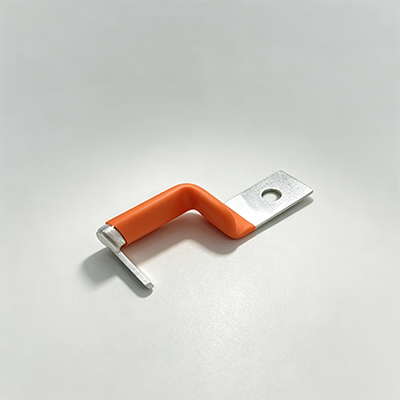
Copper strip flexible links are formed from thin copper strips that can bend while still carrying significant current. They are often used in switchgear, battery connections, and busbar systems.
Common benefits:
- Compact geometry
- High current capacity
- Easy installation in tight spaces
How Copper Flexible Connections Are Made
Manufacturing methods vary by design, but most copper flexible connections share a few common production steps:
- Copper material selection – High-conductivity copper is chosen based on the required flexibility and electrical load.
- Stranding or braiding – Fine copper wires are twisted or woven into the desired flexible structure.
- Cutting and shaping – The flexible conductor is cut to length and formed into the required shape.
- End termination – Lugs, terminals, or contact pads are attached using crimping, brazing, welding, or other methods.
- Surface treatment – Optional plating such as tin or silver may be applied to improve corrosion resistance and contact performance.
- Quality inspection – Dimensional checks, conductivity tests, and mechanical inspections ensure consistency.
In many cases, the final product is engineered to meet specific current ratings, bend radius requirements, environmental exposure conditions, and mounting geometry.
Advantages of Copper Flexible Connections
Copper flexible connections offer multiple benefits across electrical and industrial systems. These advantages explain why they are widely used in energy, transportation, manufacturing, and power equipment applications.
1. Excellent Electrical Conductivity
Copper has one of the highest conductivity levels among common engineering metals. This means copper flexible connections can transfer large amounts of current with low resistance and reduced energy loss.
2. Superior Flexibility
The flexible structure allows the connection to move without breaking. This is especially valuable where equipment vibrates or where installation alignment is not perfect.
3. Vibration Resistance
Flexible copper connections absorb vibration and mechanical shock, helping protect terminals, busbars, and connected devices from fatigue damage.
4. Thermal Expansion Compensation
When electrical equipment heats up, metal parts expand. A copper flexible connection can accommodate this expansion without placing extra stress on rigid components.
5. Reliable Long-Term Performance
Because the connection can move with the system, it often lasts longer than a rigid link in dynamic environments.
6. Reduced Maintenance Risk
By lowering stress at connection points, flexible copper conductors can reduce the likelihood of loosening, overheating, or intermittent contact issues.
7. Space Efficiency
Flexible copper links can often be shaped to fit compact equipment layouts, making them useful in crowded electrical cabinets or battery systems.
8. Good Thermal Performance
Copper dissipates heat effectively, which helps maintain stable operating temperatures in current-carrying applications.
Common Applications of Copper Flexible Connections
Copper flexible connections are used in many industries where current must flow reliably despite movement or thermal stress. Common applications include:
Application Area |
Typical Use |
|---|
Power distribution |
Connecting busbars, switchgear, and distribution components. |
Transformers |
Providing flexible current paths between transformer terminals and adjacent equipment. |
Switchgear |
Managing movement and thermal expansion in high-current assemblies. |
Battery systems |
Connecting battery cells, modules, and packs in energy storage systems. |
Grounding and bonding |
Ensuring secure electrical continuity between grounded components. |
Electric vehicles |
Supporting high-current flexible connections in power electronics and battery assemblies. |
Rail and transit systems |
Reducing vibration-related stress in traction and auxiliary electrical systems. |
Industrial machinery |
Handling repeated motion and vibration in automated equipment. |
Generators and motors |
Connecting rotating or vibrating electrical equipment safely. |
Renewable energy systems |
Used in solar inverters, energy storage, and power conversion equipment. |
These applications reflect the core strength of copper flexible connections: reliable conduction in environments where rigid conductors may fail under stress.
Key Specifications to Consider
When evaluating a copper flexible connection, several technical specifications matter. These parameters influence electrical performance, mechanical fit, and long-term reliability.
Specification |
Description |
Why It Matters |
|---|
Material grade |
Type of copper used, such as high-conductivity copper. |
Affects conductivity, strength, and durability. |
Cross-sectional area |
Total conductor area available for current flow. |
Determines current-carrying capacity. |
Current rating |
Maximum continuous current the connection can carry safely. |
Critical for electrical performance and safety. |
Length |
Overall distance between end points. |
Influences flexibility and installation fit. |
Width and thickness |
Physical dimensions of braid, strip, or laminated link. |
Affects flexibility, space usage, and heat dissipation. |
Bend radius |
Minimum radius the connection can bend without damage. |
Prevents fatigue and mechanical failure. |
End terminals |
Lugs, holes, pads, or custom terminations. |
Ensures secure attachment to equipment. |
Surface plating |
Tin, silver, nickel, or bare copper finish. |
Improves corrosion resistance and contact quality. |
Operating temperature |
Expected temperature range during service. |
Important for safety and insulation compatibility. |
Insulation |
Whether the connection is bare or insulated. |
Helps prevent accidental contact and short circuits. |
Typical Product Structure
A copper flexible connection usually consists of several parts working together to provide electrical continuity and mechanical compliance:
- Conductive core – the braided, stranded, or laminated copper section carrying current
- End lugs or terminals – connection interfaces for mounting
- Optional plating – protects contact surfaces and improves conductivity at the joint
- Optional insulation sleeve – provides electrical protection and environmental shielding
- Mounting holes or pads – allow secure fastening to equipment
This structure creates a reliable link between fixed electrical points while accommodating changes in position or temperature.
Copper Flexible Connection vs. Rigid Busbar
Many buyers compare copper flexible connections with rigid busbars. Both are used to carry current, but they serve different purposes.
Feature |
Copper Flexible Connection |
Rigid Busbar |
|---|
Flexibility |
High |
Low |
Vibration absorption |
Excellent |
Poor to moderate |
Thermal expansion handling |
Very good |
Limited |
Current transfer |
High |
High |
Installation fit in moving systems |
Excellent |
Less suitable |
Best use case |
Dynamic, vibrating, or misaligned systems |
Stable, fixed electrical layouts |
In many systems, flexible connections and rigid busbars are used together. The busbar provides structural current distribution, while the flexible copper connection handles movement, shock, or expansion between components.
Copper Flexible Connection vs. Standard Cable
Although both are flexible conductors, copper flexible connections and standard cables are not always interchangeable. Standard cable is usually designed for general power transmission, while flexible copper connections are optimized for short, high-current, low-impedance links and direct equipment bonding.
Feature |
Copper Flexible Connection |
Standard Cable |
|---|
Primary purpose |
Equipment-to-equipment flexible current link |
General electrical power transmission |
Current density |
Often higher for compact applications |
Varies by cable type |
Termination style |
Usually engineered end lugs or pads |
Multiple termination options |
Mechanical role |
Absorbs movement and vibration |
Primarily carries power |
Installation environment |
High-current industrial assemblies |
Broad range of electrical systems |
Surface Finishes and Plating Options
The surface condition of a copper flexible connection can affect corrosion resistance, contact resistance, and service life. Common finishes include:
- Bare copper – cost-effective and conductive, but less protected against oxidation
- Tin-plated copper – widely used for improved corrosion resistance and stable contact performance
- Silver-plated copper – suitable for high-performance or high-temperature applications
- Nickel-plated copper – often used when extra surface durability or environmental resistance is required
The right finish depends on operating conditions, humidity, oxidation concerns, mating materials, and long-term electrical contact requirements.
How to Select the Right Copper Flexible Connection
Selecting the correct flexible copper connection involves more than choosing a length and a conductor type. Important selection factors include:
- Required current – Ensure the connection can safely carry the expected load.
- Movement level – Determine whether the system experiences vibration, flexing, or thermal movement.
- Space available – Measure installation dimensions and clearance.
- Mounting style – Check terminal size, hole pattern, and connection geometry.
- Environmental conditions – Consider heat, moisture, chemicals, and corrosion exposure.
- Temperature range – Verify performance at both operating and ambient temperatures.
- Conductive interface – Match plating and contact surfaces to reduce oxidation and resistance.
- Mechanical requirements – Confirm bend radius, vibration endurance, and fatigue resistance.
For best performance, the copper flexible connection should be sized for both electrical load and mechanical duty. Oversizing may improve longevity, while undersizing can create heat buildup or excessive wear.
Installation Considerations
Proper installation is essential for reliable operation. Even a high-quality copper flexible connection can underperform if mounted incorrectly.
Best practices include:
- Keeping the connection within its recommended bend radius
- Avoiding sharp folds or repeated over-bending
- Ensuring clean mating surfaces
- Using correct torque on fasteners
- Preventing twisting that could damage the conductor structure
- Allowing enough slack for movement without strain
- Checking alignment before final tightening
Good installation reduces contact resistance, minimizes mechanical fatigue, and extends service life.
Maintenance and Inspection
Copper flexible connections generally require limited maintenance, but periodic inspection is recommended in critical systems. Checks may include:
- Visual inspection for discoloration, corrosion, or wear
- Checking for loose fasteners or shifting terminals
- Monitoring for abnormal heating during operation
- Examining for broken strands or braid fraying
- Verifying that insulation or protective sleeves remain intact
If a connection shows signs of overheating, mechanical damage, or oxidation, it should be evaluated promptly. Early detection helps prevent more serious electrical failures.
Performance Factors That Affect Service Life
The service life of a copper flexible connection depends on several factors:
- Current load – Higher current increases thermal stress.
- Mechanical motion – Frequent bending or vibration can accelerate fatigue.
- Installation quality – Improper fastening raises contact resistance.
- Environmental exposure – Moisture, dust, and chemicals affect corrosion.
- Material finish – Plating can improve resistance to oxidation.
- Temperature cycling – Repeated heating and cooling can stress joints.
Understanding these variables helps engineers and buyers choose the right copper flexible connection for long-term reliability.
SEO-Friendly Summary: Why Copper Flexible Connections Matter
Copper flexible connections are essential components in modern electrical and industrial systems because they provide a dependable way to transfer current while allowing movement, vibration absorption, and thermal expansion compensation. Their combination of high conductivity, mechanical flexibility, and long service life makes them a practical solution in power distribution, switchgear, transformers, battery packs, grounding systems, and many other high-current applications.
Whether built as a copper braid, stranded conductor, laminated link, or flexible strip, the purpose remains the same: to maintain a stable electrical connection under dynamic conditions. As demand grows for efficient and resilient electrical infrastructure, copper flexible connections continue to play a critical role in safe and reliable power systems.
Quick Reference Table: Copper Flexible Connection Overview
Category |
Details |
|---|
Definition |
A flexible copper-based conductor used to carry current while allowing movement. |
Working principle |
Transfers current through braided, stranded, or laminated copper while absorbing stress. |
Main benefit |
Combines electrical conductivity with mechanical flexibility. |
Common forms |
Braided, stranded, laminated, strip-based. |
Typical uses |
Busbars, switchgear, transformers, grounding, batteries, and industrial power systems. |
Key materials |
Copper, optional tin/silver/nickel plating, optional insulation. |
Selection factors |
Current rating, movement, size, termination, environment, and temperature. |
Frequently Asked Questions About Copper Flexible Connections
What is a copper flexible connection used for?
It is used to connect electrical components while allowing movement, vibration absorption, and thermal expansion compensation. It is common in high-current industrial and power applications.
Is copper better than aluminum for flexible connections?
Copper is generally preferred for flexible connections because it offers higher conductivity, better durability, and stronger mechanical performance in demanding applications.
Are copper flexible connections the same as cables?
Not exactly. While both can be flexible, copper flexible connections are often designed as specialized links for high-current, short-distance, or direct equipment connections.
Do copper flexible connections need insulation?
Not always. Some are bare copper, while others use insulation or protective sleeves depending on the installation environment and safety requirements.
How do I choose the right size?
The right size depends on current load, mechanical movement, installation space, termination type, and temperature conditions. Electrical and mechanical requirements should both be considered.
Conclusion: Copper flexible connections are a core part of safe, efficient, and durable electrical systems. By delivering current through a flexible copper structure, they help protect equipment from vibration, expansion, misalignment, and fatigue. For industry pages and SEO content, this topic is highly relevant because it addresses a common engineering need with strong search intent around copper flexible connector, copper braid connection, flexible copper busbar, and related keywords.


 +86 13169724781





 Phone
Phone
Comment
(0)