Aluminum Flexible Connection for Global Buyers: How to Source Safely?
Aluminum flexible connection products are widely used across electrical, mechanical, HVAC, power distribution, industrial
automation, transportation, and equipment assembly applications. For global buyers, sourcing an aluminum flexible
connection safely is not only about finding the lowest price. It is about verifying product quality, confirming technical
compatibility, reducing supply chain risk, and ensuring consistent performance in demanding environments.
This guide provides a complete, SEO-friendly overview of aluminum flexible connection sourcing for international buyers.
It covers definitions, common types, key advantages, material considerations, standard specifications, quality inspection
points, sourcing risks, compliance factors, and a practical buyer checklist. The content is designed for direct use in
blog pages, catalog pages, industry landing pages, and other HTML content blocks.
What Is an Aluminum Flexible Connection?
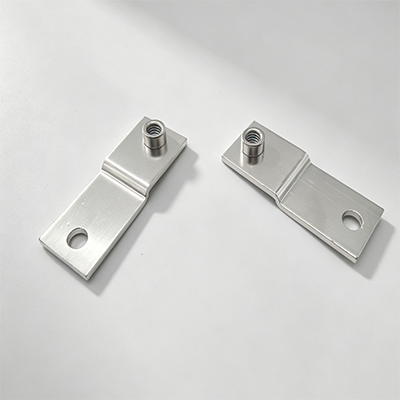
An aluminum flexible connection is a conductive or mechanical connection component made from aluminum or aluminum alloy,
designed to accommodate movement, vibration, thermal expansion, misalignment, or installation tolerance. In many
applications, it serves as a flexible link between two fixed points while maintaining conductivity, structural continuity,
or secure fastening.
Aluminum flexible connection products are used in electrical systems, busbar assemblies, battery packs, switchgear,
transformers, control cabinets, industrial machinery, and HVAC systems. Their core purpose is to maintain reliable
connection performance while allowing controlled flexibility.
In global sourcing, the term may refer to several product formats, including aluminum flexible connectors, laminated
flexible links, braided flexible conductors, expansion links, vibration-resistant joints, and custom flexible busbar
assemblies. Buyers should always confirm the exact function, application, and specification before purchasing.
Why Aluminum Flexible Connections Matter in Global Sourcing
Aluminum flexible connection products are important because they help solve real-world engineering problems. Rigid
connections often fail in environments with vibration, frequent temperature changes, or structural movement. Flexible
aluminum-based solutions can reduce stress, improve durability, and extend equipment life.
For global buyers, these products are also attractive because aluminum is lightweight, cost-effective, corrosion resistant
in many environments, and easier to transport than heavier conductive metals. In high-volume projects, aluminum flexible
connection solutions may provide strong value when correctly engineered and properly sourced.
Common Applications of Aluminum Flexible Connection
Aluminum flexible connection products are used in many industries. The following table summarizes common applications and
their typical requirements.
Application Area |
Typical Use |
Main Requirement |
|---|
Power distribution |
Flexible links in switchgear, busbar systems, and distribution cabinets |
High conductivity, thermal stability, reliable current flow |
Transformers |
Connection between moving or vibrating electrical components |
Vibration resistance, low contact resistance, durability |
Battery systems |
Flexible aluminum connectors for energy storage assemblies |
Light weight, low resistance, corrosion control |
HVAC equipment |
Flexible mechanical or conductive links in systems with thermal expansion |
Expansion tolerance, long service life, easy installation |
Industrial machinery |
Vibration-tolerant joints and conductive links |
Fatigue resistance, mechanical flexibility, secure fastening |
Rail and transport |
High-reliability connections exposed to motion and vibration |
Stability, environmental resistance, safety compliance |
Key Advantages of Aluminum Flexible Connection
Understanding the benefits of aluminum flexible connection products helps buyers compare options more effectively. Below are
the most commonly cited advantages.
1. Lightweight Construction
Aluminum is significantly lighter than many conductive metals. This reduces shipping weight, simplifies handling, and can
improve installation efficiency. In large projects, lightweight aluminum flexible connection products may also help reduce
overall system load.
2. Good Corrosion Resistance
Aluminum naturally forms an oxide layer that can help protect the surface in many environments. With the right alloy,
surface treatment, and design, aluminum flexible connection products can perform well in indoor and moderately demanding
environments.
3. Cost Efficiency
Compared with some alternative conductive materials, aluminum can be more economical, especially in large-scale purchasing.
For global buyers seeking balance between performance and budget, aluminum flexible connection solutions often offer strong
value.
4. Flexibility and Stress Relief
The main functional advantage is flexibility. A well-designed aluminum flexible connection can absorb movement, reduce
mechanical stress, and protect adjacent components from damage caused by vibration or thermal expansion.
5. Easy Fabrication
Aluminum can be cut, formed, punched, machined, and assembled into many shapes. This makes it suitable for standard and
custom flexible connection solutions, including OEM and project-based sourcing.
6. Broad Industrial Compatibility
Aluminum flexible connection products can be integrated into many equipment platforms and are widely used in both standard
and custom assemblies. This flexibility supports international procurement for diverse industries.
Types of Aluminum Flexible Connection Products
Global buyers should understand the main product types before sourcing. Different formats serve different engineering
purposes, and correct selection is essential for safe procurement.
Type |
Description |
Typical Use |
|---|
Aluminum braided flexible connector |
Made from braided aluminum conductors for flexibility and current carrying |
Electrical systems, vibration-prone installations |
Aluminum laminated flexible link |
Multiple aluminum layers joined to create a flexible conductive path |
Busbar connections, switchgear, high-current systems |
Aluminum expansion connector |
Designed to compensate for thermal expansion and movement |
HVAC, power equipment, industrial systems |
Aluminum busbar flexible connection |
A flexible section integrated into busbar assemblies |
Electrical cabinets, transformers, power distribution |
Custom aluminum flexible assembly |
Engineered to specific dimensions, hole patterns, and performance requirements |
OEM projects, special equipment, large-scale orders |
Important Material Considerations
Material selection is one of the most important aspects of sourcing an aluminum flexible connection safely. Not all aluminum
products are the same. Alloy composition, conductivity, mechanical strength, and surface treatment all affect performance.
Aluminum Alloy Selection
Common aluminum alloys may vary in strength, flexibility, conductivity, and corrosion resistance. Buyers should confirm the
alloy grade with the supplier and match it to the intended application. For example, a product designed for mechanical
flexibility may require different properties than one designed for current transmission.
Conductivity Requirements
In electrical applications, conductivity is a critical specification. Buyers should confirm the acceptable resistance level,
current rating, and temperature rise characteristics. A flexible connection may look acceptable visually but still fail if
electrical performance is not verified.
Surface Treatment
Surface treatment may include anodizing, tin plating, nickel plating, cleaning, or protective coatings. These treatments can
improve oxidation resistance, contact quality, and service life. The choice of surface treatment should align with the
operating environment and the installation method.
Thickness and Cross-Section
Thickness, width, and cross-sectional area directly influence current-carrying capacity and mechanical strength. Buyers
should never assume that two aluminum flexible connection products with the same outer dimensions have the same
performance. Internal structure matters.
Standard Specifications Buyers Should Check
When sourcing aluminum flexible connection products internationally, specification control is essential. The table below
lists common parameters buyers should confirm before placing an order.
Specification Item |
Why It Matters |
Buyer Action |
|---|
Material grade |
Affects conductivity, strength, and corrosion resistance |
Request full material declaration |
Dimensions |
Ensures installation compatibility |
Verify length, width, thickness, hole size, and spacing |
Current rating |
Determines electrical load capacity |
Confirm operating and peak current ratings |
Voltage class |
Important for insulation and system compatibility |
Match to system voltage requirements |
Temperature range |
Ensures safe performance in operating conditions |
Request min/max working temperature |
Flexibility radius |
Determines how the connection can bend or move |
Check minimum bend radius if applicable |
Surface finish |
Impacts corrosion resistance and contact quality |
Specify finish type and coating thickness if needed |
Mounting method |
Ensures proper installation |
Confirm hole pattern, fastener type, and torque requirements |
Mechanical endurance |
Affects long-term reliability under repeated movement |
Ask for fatigue or cycle-life data |
How to Source Aluminum Flexible Connection Safely
Safe sourcing starts with a structured procurement process. Global buyers should evaluate the product, supplier, technical
documents, testing capability, and logistics risk before making a purchase commitment.
Step 1: Define the Application Clearly
Begin by identifying the exact use case. Is the aluminum flexible connection intended for electrical conductivity,
vibration relief, thermal expansion, or mechanical linkage? The application determines the necessary material, dimensions,
and performance standards.
Step 2: Request Complete Technical Data
Always request a full specification sheet. This should include material grade, dimensions, conductivity data, surface
treatment, tolerances, operating environment, and recommended installation guidelines. A reliable supplier should be able
to provide this information consistently.
Step 3: Verify Compliance Requirements
International buyers may need to comply with RoHS, REACH, ISO quality systems, UL-related requirements, or market-specific
electrical standards. Compliance requirements vary by destination market and application, so confirm them before placing
an order.
Step 4: Evaluate Manufacturing Capability
Check whether the supplier can support consistent quality, stable production volume, and custom engineering if needed.
Buyers should review production capacity, process control, and inspection methods. This is especially important for
recurring orders and project-based supply.
Step 5: Ask for Samples and Testing Reports
Samples allow buyers to verify fit, finish, conductivity, and installation compatibility. Testing reports can confirm that
the aluminum flexible connection meets the required mechanical and electrical performance standards.
Step 6: Inspect Packaging and Export Readiness
Proper packaging protects the product from deformation, contamination, and moisture during transit. Export-ready packaging
is especially important for bulk international shipments. Buyers should also confirm labeling, carton strength, and pallet
configuration.
Quality Control Checks for Aluminum Flexible Connection
Quality control is central to safe sourcing. A product may look correct on paper but still fail in use if quality control is
weak. The following table outlines key inspection points.
Inspection Item |
What to Check |
Risk if Ignored |
|---|
Dimensional accuracy |
Length, thickness, hole spacing, alignment |
Poor fit, installation delays, assembly failure |
Surface condition |
Scratches, oxidation, contamination, coating uniformity |
Reduced contact quality and shorter service life |
Conductivity test |
Electrical resistance and current-carrying performance |
Overheating, voltage loss, failure in operation |
Mechanical strength |
Bending, tension, fatigue resistance |
Cracking, breakage, or deformation |
Fastener compatibility |
Hole size, plating, torque tolerance |
Loose connection or improper assembly |
Packaging integrity |
Damage prevention during storage and transport |
Scrapped goods, rework, or delivery disputes |
Common Sourcing Risks and How to Avoid Them
Global buyers face several risks when sourcing aluminum flexible connection products. Understanding these risks can help
prevent costly mistakes.
Risk 1: Misleading Specifications
Some products may be advertised with broad or incomplete descriptions. Buyers should verify the actual alloy, dimensions,
surface treatment, and performance data rather than relying on general claims.
Risk 2: Inconsistent Quality
Batch-to-batch variation can cause serious issues in repetitive production. Buyers should ask about quality control systems,
inspection procedures, and traceability.
Risk 3: Poor Application Matching
A flexible connection that works in one environment may fail in another. Temperature, vibration, humidity, corrosion
exposure, and electrical load all matter. Match the product to the exact operating conditions.
Risk 4: Weak Documentation
Incomplete datasheets, missing test records, and unclear certifications can create import, compliance, or liability
problems. Documentation should be reviewed before shipment.
Risk 5: Logistics Damage
Because aluminum products can deform if packed poorly, shipping damage is a real concern. Buyers should require stable
packaging and clear handling instructions.
Buyer Checklist for Safe Procurement
Use the following checklist to evaluate aluminum flexible connection suppliers and products more safely.
Checklist Item |
Yes/No |
Notes |
|---|
Application clearly defined |
|
Electrical, mechanical, or thermal movement use case confirmed |
Material grade specified |
|
Alloy and finish fully identified |
Dimensions verified |
|
Length, width, thickness, holes, and tolerances confirmed |
Performance data reviewed |
|
Current, resistance, temperature, and fatigue data checked |
Compliance requirements confirmed |
|
Market and application standards reviewed |
Samples tested |
|
Fit and performance validated before mass order |
Packaging reviewed |
|
Shipping protection confirmed |
Inspection plan prepared |
|
Incoming quality checks defined |
Delivery timeline confirmed |
|
Lead time and order schedule agreed |
Documentation collected |
|
Datasheet, test report, and order records retained |
Technical Terms Buyers Should Know
When sourcing aluminum flexible connection products, certain technical terms appear often in quotations, drawings, and
datasheets. Understanding them improves buyer confidence and reduces communication errors.
Term |
Meaning |
|---|
Conductivity |
The ability of the aluminum flexible connection to carry electric current efficiently |
Contact resistance |
The resistance at the connection point, which affects heat generation and energy loss |
Current carrying capacity |
The maximum current the product can safely handle |
Fatigue resistance |
The ability to withstand repeated bending or movement without failure |
Tolerance |
The acceptable deviation from the specified dimensions |
Surface treatment |
A coating or finishing process used to improve performance or protection |
Thermal expansion |
Material expansion caused by temperature changes |
OEM |
Original Equipment Manufacturer, often used for custom or private-label sourcing |
How Buyers Can Compare Suppliers
Although this guide does not recommend specific companies, buyers still need a rational way to compare options. A strong
supplier should offer technical clarity, stable production, export competence, and reliable communication.
Key comparison points include the ability to provide detailed specifications, willingness to support samples, consistency of
quality documentation, responsiveness to engineering questions, and experience handling international shipments. Price is
important, but it should never be the only factor in sourcing an aluminum flexible connection.
Frequently Asked Questions About Aluminum Flexible Connection
What is the main purpose of an aluminum flexible connection?
The main purpose is to connect two points while allowing flexibility for movement, vibration, or thermal expansion. It
helps protect equipment and improve long-term reliability.
Is aluminum flexible connection suitable for electrical use?
Yes, many aluminum flexible connection products are designed for electrical applications. However, buyers must verify
conductivity, current rating, contact resistance, and compatibility with the intended system.
Can aluminum flexible connection be custom-made?
Yes. Custom dimensions, hole patterns, thicknesses, and surface treatments are common in industrial procurement. Custom
sourcing is often used for OEM projects and specialized systems.
What should buyers request before ordering?
Buyers should request a datasheet, material specification, dimensional drawing, performance data, sample confirmation, and
quality documentation before committing to bulk orders.
What is the biggest risk in sourcing internationally?
The biggest risk is purchasing a product that does not match the real application requirements. This can lead to
installation problems, system failure, and added costs.
Conclusion
Aluminum flexible connection products are an important part of modern industrial and electrical systems. For global buyers,
safe sourcing depends on clear technical definition, careful supplier evaluation, complete documentation, and strong
quality control. By understanding material properties, standard specifications, application requirements, and common
sourcing risks, buyers can reduce procurement errors and improve long-term performance.
Whether you are sourcing aluminum flexible connection products for power distribution, switchgear, battery systems, HVAC,
or industrial equipment, the safest approach is always the same: define the application precisely, verify the data, inspect
the samples, and confirm the quality before mass purchase. In international trade, informed sourcing is the foundation of
reliability, cost control, and product safety.
```


 +86 13169724781





 Phone
Phone
Comment
(0)