Aluminum Flexible Connection Manufacturer Latest Trends: What Is New in the Market?
The aluminum flexible connection market is evolving quickly as industries demand lighter weight,
better corrosion resistance, improved vibration control, and more efficient installation methods. As a result,
every aluminum flexible connection manufacturer is under pressure to deliver products that meet
stricter performance requirements while supporting modern industrial systems. From HVAC and power distribution to
automotive, marine, aerospace, and manufacturing equipment, aluminum flexible connections are being specified more
often because they offer a practical balance of flexibility, durability, and cost efficiency.
If you are researching latest trends in aluminum flexible connection manufacturing, this guide
provides a comprehensive, SEO-friendly overview of what is new in the market. It includes definitions, product
benefits, common specifications, emerging applications, material considerations, manufacturing trends, and a
practical comparison table. The content is written for use on blog pages, directory pages, industry landing pages,
and technical resource pages, and it is designed to help search engines understand the topic clearly.
What Is an Aluminum Flexible Connection?
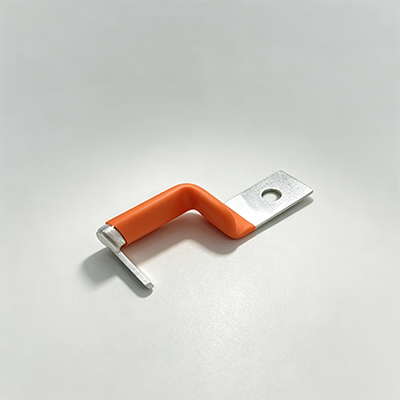
An aluminum flexible connection is a conductive or mechanical connection component designed to
absorb movement, vibration, thermal expansion, misalignment, and stress between two fixed points. In many cases,
aluminum flexible connections are used where rigid connections would fail due to repeated movement or changing
operating conditions. These products are commonly fabricated from aluminum strips, braided aluminum conductors,
laminated foil structures, or engineered aluminum assemblies.
In industrial and electrical systems, aluminum flexible connections are valued for their low weight, good
conductivity, corrosion resistance, and adaptability. They are frequently used where a system must maintain
electrical continuity or mechanical integrity while allowing flexibility. Depending on the design, an aluminum
flexible connection may be used in power cabinets, transformers, switchgear, battery systems, busbar assemblies,
engines, exhaust systems, pumps, compressors, and rotating machinery.
Why Aluminum Flexible Connection Demand Is Growing
The market is experiencing growth because modern systems are becoming more compact, more energy-efficient, and
more sensitive to vibration and thermal stress. Traditional rigid connectors often cannot handle these challenges
effectively. In contrast, aluminum flexible connections can reduce stress concentration and extend service life.
- Weight reduction: Aluminum is lighter than copper and many steel-based alternatives.
- Cost efficiency: Aluminum is often more economical for large-volume industrial use.
- Corrosion resistance: Properly treated aluminum performs well in many environments.
- Flexibility and movement absorption: Helps systems handle vibration and thermal expansion.
- Improved installation efficiency: Easier handling and faster assembly in many applications.
- Compatibility with modern equipment: Supports compact, modular, and high-performance designs.
Latest Trends in Aluminum Flexible Connection Manufacturing
The newest trends in the market are centered around lightweight design, performance reliability, sustainability,
and customization. Below are the most important developments that define the current landscape for any
aluminum flexible connection manufacturer.
1. Increased Demand for Lightweight Electrical and Mechanical Connections
One of the strongest trends is the shift toward lightweight components. Engineers and procurement teams are
looking for solutions that reduce total system weight without sacrificing performance. Aluminum flexible
connections are increasingly selected over heavier alternatives because they help lower structural loads, improve
transport efficiency, and support energy savings in mobile and stationary systems.
2. Better Thermal Expansion Management
Thermal cycling is a critical issue in many systems. As temperatures rise and fall, materials expand and contract.
Flexible connections made from aluminum are being engineered to better handle thermal movement. This trend is
especially visible in electrical enclosures, busbar systems, power electronics, industrial ovens, and equipment
exposed to fluctuating temperatures.
3. Improved Surface Treatment and Oxidation Control
Aluminum naturally forms an oxide layer that can affect electrical contact performance if not properly managed.
Modern manufacturers are focusing more on surface treatment technologies such as tin plating, nickel plating,
anodizing, conductive coatings, and controlled cleaning processes. These treatments can improve conductivity,
reduce contact resistance, and enhance long-term reliability.
4. Growth in Customized and Application-Specific Designs
More buyers are requesting customized aluminum flexible connections for specific applications rather than standard
one-size-fits-all products. This includes tailored dimensions, hole patterns, bend radius, current rating,
insulation requirements, and environmental resistance. Customization has become a major competitive factor in the
market.
5. Rising Use in Renewable Energy and Battery Systems
Renewable energy systems and battery-based power storage are increasing demand for flexible, lightweight,
corrosion-resistant connectors. Aluminum flexible connections are being used in power conversion units, battery
packs, inverters, energy storage systems, and related electrical assemblies. The market trend is moving toward
safe, compact, and efficient connector solutions for high-growth energy sectors.
6. Stronger Emphasis on Vibration Resistance
Vibration resistance is now a core design requirement in automotive, rail, industrial machinery, and marine
applications. Manufacturers are developing aluminum flexible connection products that better absorb movement,
reduce loosening, and maintain stable performance under continuous mechanical stress. This trend is particularly
important for dynamic systems.
7. More Use of Advanced Manufacturing Processes
Modern production methods are helping manufacturers achieve tighter tolerances, better consistency, and more
complex geometries. Laser cutting, precision stamping, CNC forming, automated bending, and improved joining methods
are now widely used. These technologies improve product quality and support repeatable manufacturing at scale.
8. Focus on Sustainability and Recyclability
Sustainability is a major market theme. Aluminum is highly recyclable, making it attractive to industries seeking
more sustainable supply chains. A growing number of buyers evaluate not only product performance but also material
lifecycle, recycling potential, and environmental footprint. This is pushing manufacturers to adopt cleaner
processes and more efficient material usage.
9. Higher Expectations for Electrical Performance
In power applications, customers now expect flexible connections to provide stable conductivity, low resistance,
and minimal heat generation. Market demand is shifting toward products that perform reliably under high current
loads, repeated thermal cycling, and harsh conditions. Manufacturers are improving conductor geometry and contact
design to address these expectations.
10. Digital Quality Control and Traceability
Another important trend is the use of digital quality control systems. Manufacturers are adopting advanced
inspection tools, traceability systems, and data-driven process monitoring to reduce defects and maintain
consistent product quality. This is especially important for industries that require documentation and strict
compliance.
Key Advantages of Aluminum Flexible Connections
Aluminum flexible connections provide a wide range of technical and commercial advantages. These benefits explain
why the market continues to expand across multiple industries.
Advantage |
Description |
Market Impact |
|---|
Lightweight construction |
Aluminum reduces overall system weight compared with many alternatives. |
Helps improve installation, mobility, and transport efficiency. |
Corrosion resistance |
Aluminum can perform well in many indoor and outdoor environments. |
Extends service life in demanding conditions. |
Good conductivity |
Suitable for many electrical connection applications when properly designed. |
Supports stable current transfer and low resistance. |
Flexibility |
Absorbs movement, vibration, and thermal expansion. |
Reduces stress on connected equipment. |
Cost efficiency |
Often more affordable than some heavier or more expensive materials. |
Useful for large-scale industrial production. |
Recyclability |
Aluminum can be recycled repeatedly with high material value. |
Supports sustainability and circular manufacturing goals. |
Common Applications of Aluminum Flexible Connections
The market for aluminum flexible connection products spans many industries. The following applications represent
the most common and fastest-growing use cases.
- HVAC systems: Used to manage vibration and thermal movement in ducts, chillers, and compressors.
- Electrical switchgear: Supports current transfer while allowing alignment tolerance and movement.
- Transformers: Helps reduce mechanical stress in high-current electrical assemblies.
- Busbar systems: Used where electrical continuity and flexibility are both required.
- Battery and energy storage systems: Supports compact and lightweight power connections.
- Automotive systems: Useful in engine compartments, battery modules, and vibration-prone assemblies.
- Rail and transportation: Performs well where vibration and repeated movement are common.
- Marine equipment: Chosen for corrosion-resistant and space-efficient connection designs.
- Industrial machinery: Protects against shock, vibration, and thermal expansion in operations.
- Renewable energy systems: Increasingly used in solar, inverter, and storage applications.
Material and Design Considerations
When selecting or manufacturing an aluminum flexible connection, several technical factors influence performance.
Buyers and engineers often compare these factors before finalizing specifications.
Design Factor |
What It Means |
Why It Matters |
|---|
Alloy grade |
The specific aluminum alloy used in the product. |
Affects strength, conductivity, and corrosion resistance. |
Thickness |
The material thickness of the flexible connector. |
Influences current capacity, flexibility, and mechanical durability. |
Width |
The overall width of the connection strip or braid. |
Impacts current flow and installation space requirements. |
Bend radius |
The minimum safe bending radius for the component. |
Important for avoiding material fatigue or deformation. |
Contact surface treatment |
Plating or coating applied to the contact area. |
Improves conductivity and resistance to oxidation. |
Insulation option |
Protective covering or insulation layer. |
Enhances safety and environmental protection. |
Mounting pattern |
Hole size, hole spacing, and terminal interface design. |
Determines compatibility with equipment and assembly systems. |
Operating environment |
Temperature, humidity, vibration, and exposure conditions. |
Guides material selection and product structure. |
Typical Specifications of Aluminum Flexible Connection Products
Actual product specifications vary by application, but the following table shows common parameters found in the
market. These general ranges are useful for product comparison, catalog content, and engineering reference.
Specification |
Typical Range / Options |
Notes |
|---|
Material |
Aluminum alloy, laminated aluminum, braided aluminum |
Selected based on conductivity and flexibility needs |
Surface finish |
Raw, tin-plated, nickel-plated, anodized, coated |
Depends on electrical and environmental requirements |
Thickness |
Custom or application-specific |
Thicker products may support higher load and durability |
Width |
Custom or application-specific |
Wider designs can support more current capacity |
Length |
Short, medium, or custom length |
Chosen based on movement range and installation space |
Mounting style |
Flat ends, punched ends, bolt-on, clamp-style |
Must match equipment interface |
Current rating |
Application-specific |
Depends on conductor design and thermal management |
Temperature range |
Varies by insulation and coating |
Should be matched to operating conditions |
Protection |
Insulated or non-insulated |
Safety and environmental protection requirement |
Custom fabrication |
Available |
Often required for OEM and industrial projects |
How Aluminum Flexible Connection Manufacturers Are Innovating
Manufacturers are competing not only on price, but also on engineering capability, lead time, customization, and
product consistency. New market expectations are encouraging innovation across the entire production process.
Precision Engineering
More manufacturers are using precise forming and cutting methods to ensure accurate dimensions and repeatable
performance. This is important for electrical contact quality and mechanical fit.
Better Joining Technologies
Joining methods such as ultrasonic welding, friction-based joining, mechanical fastening, and advanced crimping
are being improved to support stronger and more stable connections. Reliable joints are critical for long-term
safety and conductivity.
Enhanced Testing and Validation
Product testing now includes current cycling, thermal cycling, vibration testing, corrosion resistance evaluation,
and dimensional inspection. These tests help manufacturers meet demanding industrial expectations.
Flexible Production for Small and Large Orders
The market is increasingly segmented by order size. Some customers need high-volume standardized parts, while
others need small-batch custom components. Manufacturers are adapting with more flexible production systems that
can serve both markets efficiently.
Support for OEM and Private Label Supply
Many buyers are looking for OEM-compatible products or private label manufacturing. This trend is especially
strong in industrial distribution and equipment assembly. A manufacturer that can provide drawing-based production,
branding support, and consistent quality has a stronger market position.
Market Drivers Influencing Aluminum Flexible Connection Demand
Several macro trends are accelerating demand across global markets:
- Industrial automation: More automated systems need reliable vibration-resistant connections.
- Electrification: Power systems and electric equipment rely on efficient current transfer.
- Infrastructure upgrades: New and retrofitted electrical systems require flexible components.
- Energy transition: Renewable energy and storage applications are expanding fast.
- Compact product design: Smaller equipment demands space-saving flexible connectors.
- Durability expectations: End users expect longer service life and lower maintenance.
Comparison: Aluminum Flexible Connections vs Other Connection Types
Buyers often compare aluminum flexible connections with copper flexible connections, rigid bars, and mixed-material
assemblies. The following table provides a simple market-level comparison.
Connection Type |
Main Strengths |
Main Limitations |
Typical Use Case |
|---|
Aluminum flexible connection |
Lightweight, cost-effective, flexible, recyclable |
Requires proper surface treatment and design control |
HVAC, power systems, transportation, industrial equipment |
Copper flexible connection |
Excellent conductivity, widely used, stable performance |
Heavier and often more expensive |
High-current electrical applications |
Rigid busbar |
Simple structure, strong electrical path |
Does not absorb vibration or movement well |
Fixed electrical assemblies |
Mixed-material connector |
Can combine advantages of multiple materials |
More complex to manufacture and assemble |
Specialized custom systems |
What Buyers Look for in an Aluminum Flexible Connection Manufacturer
Buyers evaluating a aluminum flexible connection manufacturer usually look for several important
factors. These criteria can help determine product suitability, supplier reliability, and total cost of ownership.
- Technical capability: Ability to produce accurate, application-specific designs.
- Material expertise: Knowledge of aluminum grades, surface finishing, and performance behavior.
- Quality consistency: Stable output across batches and production runs.
- Customization support: Willingness to manufacture to drawing or specification.
- Testing and inspection: Evidence of product validation and quality control.
- Lead time: Fast and dependable delivery schedules.
- Compliance awareness: Familiarity with common industrial and electrical requirements.
- Scalability: Ability to serve prototype, small batch, and mass production needs.
Frequently Used SEO Keywords in This Topic
For content planning, catalog pages, and industry SEO, the following keywords and phrases are highly relevant:
- aluminum flexible connection manufacturer
- aluminum flexible connection latest trends
- aluminum flexible connector
- flexible aluminum connection
- aluminum expansion connector
- aluminum braided flexible connector
- custom aluminum flexible connection
- industrial flexible aluminum connector
- aluminum electrical flexible connector
- lightweight flexible connector for power systems
Future Outlook for the Aluminum Flexible Connection Market
The future of the market appears strong. Demand is expected to remain supported by electrification, sustainability,
industrial modernization, and lightweight engineering. As equipment becomes more compact and performance-sensitive,
the role of flexible connections will continue to grow.
In particular, the market is likely to see continued growth in customized products, improved surface treatment,
more advanced testing, and greater use in energy storage, automation, and transportation systems. Manufacturers
that can combine reliable engineering with scalable production and consistent quality will be well positioned in
the coming years.
Summary
The aluminum flexible connection market is being shaped by lightweight design, vibration control, thermal
management, sustainability, and application-specific customization. A modern aluminum flexible connection
manufacturer must respond to higher expectations for durability, conductivity, precision, and supply
reliability. Buyers now want flexible connection solutions that are efficient, easy to install, and tailored to
demanding operating environments.
Whether used in electrical systems, industrial machinery, transportation, or energy storage, aluminum flexible
connections continue to gain attention as a practical and scalable solution. For companies building content around
this topic, focusing on definitions, benefits, specifications, and market trends can help improve search visibility
and user engagement. The topic remains highly relevant for SEO, industrial directories, product category pages,
and technical blog content.


 +86 13169724781





 Phone
Phone
Comment
(0)