New Energy Flexible Copper Busbar for Power Battery Pack: How to Select?
In the rapidly growing new energy industry, flexible copper busbar for power battery pack has become a critical conductor solution for electric vehicles, energy storage systems, lithium battery packs, and high-current power modules. As battery systems continue to evolve toward higher energy density, stronger vibration resistance, compact layouts, and safer thermal performance, the demand for a reliable flexible copper busbar is increasing quickly.
This guide explains what a new energy flexible copper busbar is, why it is widely used in power battery packs, how to select the right type, what key technical parameters matter, and which specifications should be considered during procurement. The content is designed for SEO, industry pages, product category pages, and blog articles, and it focuses only on general industry knowledge, not on specific company recommendations.
1. What Is a New Energy Flexible Copper Busbar?
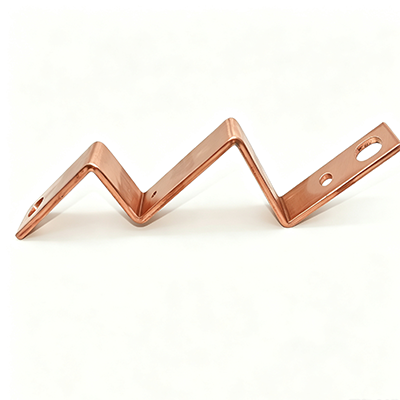
A new energy flexible copper busbar is a conductive connector designed to carry high current between battery cells, modules, packs, and power distribution points in new energy applications. Unlike rigid copper bars, a flexible copper busbar can absorb vibration, compensate for alignment deviation, support thermal expansion, and reduce mechanical stress on battery terminals.
In a power battery pack, flexible copper busbars are often used to connect:
- Battery cells in series or parallel
- Battery modules inside a pack
- Pack-level power output terminals
- Fuse links, contactors, and current sensors
- Busway interfaces in energy storage cabinets
Compared with standard wiring solutions, a flexible copper busbar provides a lower-resistance and more compact current path. Compared with a rigid copper bar, it offers better vibration tolerance and installation flexibility. These advantages make it especially suitable for power battery pack applications, where current load, heat management, and mechanical reliability are equally important.
2. Why Flexible Copper Busbar Is Important in Power Battery Packs
Power battery packs in electric vehicles, industrial equipment, and energy storage systems operate under demanding conditions. They must handle high current, frequent charging and discharging cycles, temperature changes, mechanical vibration, and limited installation space. A properly selected flexible copper busbar helps improve the overall performance and reliability of the battery system.
2.1 High Current Carrying Capability
Copper has excellent electrical conductivity, making it a preferred material for current transmission. A flexible copper busbar can carry large current with lower voltage drop and lower energy loss than many alternative conductors. This is essential in a new energy battery pack, where efficiency directly affects range, runtime, and thermal performance.
2.2 Vibration and Shock Resistance
Battery packs installed in vehicles and mobile equipment experience continuous vibration and occasional shock. A flexible copper busbar can reduce stress concentration at connection points, helping avoid loose joints, cracks, and fatigue failure. This improves long-term system stability.
2.3 Thermal Expansion Compensation
Battery systems generate heat during charging and discharging. Different materials expand at different rates when temperatures change. Flexible copper busbars help absorb expansion and contraction, reducing stress on terminals and supporting safer operation.
2.4 Space-Saving Design
Modern battery packs are becoming more compact. Flexible copper busbars can be designed in customized shapes, such as braided, laminated, or multi-layer structures, to fit tight layouts without sacrificing performance. This makes them a strong option for high-density power battery pack design.
2.5 Improved Installation Efficiency
Flexible copper busbars are often easier to align and install than rigid metal bars. They can accommodate small positional errors and reduce assembly difficulty. This is especially useful in mass production, where consistency and speed are important.
3. Main Types of Flexible Copper Busbar for New Energy Applications
Flexible copper busbars are available in several structural forms. The right choice depends on current rating, installation space, mechanical requirements, and thermal conditions. The most common types are listed below.
Type |
Structure |
Main Advantages |
Typical Applications |
|---|
Braided Copper Busbar |
Multiple copper strands woven into a flexible braid |
Excellent flexibility, vibration resistance, easy bending |
Battery packs, EV systems, inverter connections |
Laminated Copper Busbar |
Thin copper layers laminated with insulation |
Low inductance, stable current flow, compact structure |
High-frequency power systems, battery modules, energy storage |
Stranded Copper Busbar |
Thick copper strands bundled together |
Good conductivity, moderate flexibility, cost-effective |
General battery pack connections, power terminals |
Flexible Copper Foil Busbar |
Thin copper foil layers with insulation or sleeves |
Ultra-low resistance, high current density, customizable shape |
Compact battery packs, high-current distribution |
Insulated Flexible Busbar |
Flexible copper conductor with outer insulation layer |
Improved safety, anti-short-circuit protection |
Pack-level connections, protected assemblies |
4. Key Advantages of Flexible Copper Busbar in Power Battery Packs
When used correctly, a flexible copper busbar for power battery pack can provide multiple benefits across electrical, mechanical, and thermal performance.
4.1 Lower Electrical Resistance
Copper naturally offers very low resistivity. A properly engineered busbar minimizes contact resistance and conductor loss, helping maintain stable voltage delivery across the battery pack.
4.2 Better Connection Reliability
Flexible structures reduce the effect of stress on bolted or welded joints. This is especially important in applications where repeated vibration could otherwise loosen a rigid connection.
4.3 Enhanced Safety
In power battery systems, safety is a top priority. A flexible copper busbar with suitable insulation, heat resistance, and flame-retardant properties can help reduce short-circuit risk and support safer pack design.
4.4 Strong Customization Capability
Flexible copper busbars can be customized in length, width, thickness, hole position, insulation material, shape, and current capacity. This makes them suitable for different battery pack architectures and module arrangements.
4.5 Better Thermal Management
Lower resistance means less heat generation. In addition, some busbar designs can be integrated with thermal pads, insulation layers, or cooling structures to improve system-level heat control.
5. How to Select a Flexible Copper Busbar for Power Battery Pack
Choosing the right new energy flexible copper busbar requires balancing electrical performance, mechanical durability, thermal resistance, safety compliance, and installation conditions. The following factors are the most important selection criteria.
5.1 Current Carrying Requirement
Start by determining the maximum continuous current and peak current of the battery pack. The busbar must be able to safely carry the expected load without overheating. A higher current usually requires larger cross-sectional area, better conductor quality, and more robust connection design.
5.2 Voltage Drop Limit
Voltage drop affects energy efficiency and system performance. In battery pack design, the busbar should be selected to keep resistance low enough for stable output. Long busbars, narrow conductors, and poor joints can all increase voltage drop.
5.3 Installation Space and Shape
The physical layout of the battery pack strongly influences busbar selection. Measure the available space carefully, including distance between terminals, bend radius, height limit, and clearance around neighboring components. A flexible design should match the exact path of the connection.
5.4 Mechanical Vibration Level
If the battery pack is used in EVs, buses, trucks, construction machinery, marine systems, or rail applications, vibration resistance becomes a major selection factor. Braided or laminated flexible copper busbars are often preferred where continuous movement or shock is expected.
5.5 Operating Temperature
Temperature affects both conductivity and insulation performance. Make sure the selected busbar material, insulation sleeve, and connection method can withstand the expected working temperature range. High-temperature environments require higher-grade insulation and verified thermal stability.
5.6 Insulation and Safety Protection
For battery packs, electrical isolation is critical. The busbar may need heat-shrink tubing, silicone insulation, PET film, epoxy coating, or molded protective sleeves. The choice should prevent accidental short circuits and protect against abrasion, moisture, and contaminants.
5.7 Connection Method
Flexible copper busbars can be connected using bolting, welding, riveting, or hybrid methods. The connection method must match the terminal design and assembly process. A poor connection can create resistance, heat, and reliability issues even if the busbar itself is well designed.
5.8 Material Purity and Conductivity
High-purity copper generally delivers better conductivity and lower loss. When selecting a busbar, review copper grade, strand quality, plating type, and consistency of material thickness. Material quality directly influences long-term electrical performance.
5.9 Surface Treatment
Surface finishes such as tin plating, nickel plating, or silver plating may be used to improve corrosion resistance, solderability, and contact reliability. The right surface treatment depends on environment, cost target, and connection type.
5.10 Compliance and Testing
For new energy applications, selection should be based on applicable standards, testing requirements, and system-level validation. Important tests may include current carrying test, temperature rise test, vibration test, insulation test, salt spray test, and bend fatigue test.
6. Technical Parameters to Check Before Purchasing
To choose the right flexible copper busbar, buyers and engineers should review a detailed specification list. The table below shows common parameters used in industry evaluation.
Parameter |
What to Check |
Why It Matters |
|---|
Material |
Pure copper, tinned copper, laminated copper, braided copper |
Determines conductivity, corrosion resistance, and flexibility |
Cross-Sectional Area |
Width, thickness, strand count, foil thickness |
Affects current capacity and temperature rise |
Rated Current |
Continuous and peak current values |
Ensures safe operation under load |
Resistance |
DC resistance per unit length |
Impacts voltage drop and power loss |
Flexibility |
Minimum bend radius, fatigue performance |
Important for tight layouts and repeated movement |
Insulation Class |
Heat resistance, dielectric strength, flame rating |
Protects against electrical failure and short circuits |
Terminal Design |
Hole size, hole spacing, thickness, plating |
Ensures stable mechanical and electrical contact |
Environmental Resistance |
Humidity, salt spray, oil, dust, UV, temperature |
Affects durability in real-world applications |
Assembly Method |
Bolted, welded, crimped, riveted |
Influences installation efficiency and reliability |
Customization |
Length, shape, coating, marking, insulation color |
Supports application-specific design integration |
7. Common Specification Range Example
The following table gives a general reference for common flexible copper busbar specifications used in power battery pack applications. Actual selection should always be based on real current demand, system layout, temperature conditions, and validation testing.
Specification Item |
Typical Range |
Notes |
|---|
Copper Material |
High-conductivity copper |
Often used with tin-plated or bare finish |
Busbar Type |
Braided, laminated, foil, stranded |
Chosen according to flexibility and current need |
Thickness |
0.2 mm to several mm |
Depends on design and current rating |
Width |
Customizable from narrow to wide formats |
Determines current path and installation fit |
Length |
Custom length |
Should match pack layout and terminal distance |
Insulation |
Optional or fully insulated |
Common materials include heat-shrink and film layers |
Operating Temperature |
Dependent on insulation grade and system design |
Must match battery pack environment |
Surface Treatment |
Tin, nickel, silver, or bare copper |
Selected by corrosion and contact requirements |
Connection Type |
Hole, welded, crimped, or custom terminal |
Should match battery terminal structure |
8. Flexible Copper Busbar Design Considerations
Designing a flexible copper busbar for a power battery pack requires attention to several electrical and mechanical principles. Even small design mistakes can lead to overheating, assembly problems, or reduced service life.
8.1 Minimize Contact Resistance
The interface between the busbar and the terminal is often the highest-risk area. Use appropriate surface treatment, correct torque, and well-matched terminal geometry to reduce resistance and avoid hot spots.
8.2 Control Bending Stress
Flexible busbars should not be bent beyond their recommended radius. Excessive bending can damage the conductor structure, reduce fatigue life, or cause cracking in insulation materials.
8.3 Allow for Thermal Movement
Battery modules and conductive parts expand and contract during operation. A flexible busbar should provide enough movement allowance to prevent stress buildup in the pack.
8.4 Prevent Interference with Other Components
Busbar routing should avoid contact with cooling pipes, structural frames, sensors, and sharp edges. Proper layout planning improves safety and maintenance performance.
8.5 Consider Heat Dissipation
A busbar with poor thermal design may become a hot spot. Selection should include attention to conductor size, insulation type, airflow environment, and proximity to heat-sensitive components.
9. Application Scenarios of Flexible Copper Busbar in New Energy Industry
Flexible copper busbars are widely used across multiple sectors in the new energy industry. Their role varies depending on the power architecture and mechanical environment.
Application Area |
Typical Role |
Main Requirement |
|---|
Electric Vehicle Battery Pack |
Cell-to-cell and module-to-module power connection |
High vibration resistance, compact size |
Energy Storage System |
Battery cabinet current transfer and distribution |
High current capacity, safe insulation |
Lithium Battery Module |
Internal module connection |
Stable conductivity and thermal reliability |
Power Electronics |
Connection between terminals and devices |
Low inductance and low resistance |
Industrial Battery Equipment |
Heavy-duty energy transmission |
Durability and long service life |
Hybrid Power Systems |
Integration of battery and auxiliary power circuits |
Flexible installation and stable output |
10. How to Evaluate Quality of a Flexible Copper Busbar
Quality evaluation is essential before selecting a supplier or placing a bulk order. Even though this article does not recommend any specific company, the following universal checks can help buyers make a more informed decision.
- Appearance: Check for burrs, deformation, oxidation, uneven plating, or insulation damage.
- Dimensional accuracy: Confirm width, thickness, hole spacing, and length tolerance.
- Conductivity consistency: Verify that the material meets required electrical performance.
- Mechanical strength: Ensure the busbar can withstand installation torque and vibration.
- Insulation integrity: Confirm that insulation layers are uniform and defect-free.
- Thermal stability: Review whether the busbar maintains performance under elevated temperature.
- Fatigue resistance: Check whether repeated bending or vibration causes damage.
- Corrosion resistance: Assess performance in humid or salt-rich environments.
11. Common Mistakes When Selecting Flexible Copper Busbar
Many projects encounter issues because the busbar was selected only by size or price, without considering application conditions. Common mistakes include:
- Choosing a busbar with insufficient current rating
- Ignoring voltage drop and temperature rise
- Using a design that does not match vibration requirements
- Overlooking insulation thickness and dielectric strength
- Selecting the wrong connection hole pattern
- Failing to verify bend radius and installation space
- Using untested surface treatment in corrosive environments
- Skipping thermal and mechanical validation tests
Avoiding these mistakes can significantly improve battery pack safety, reduce maintenance cost, and extend service life.
12. Selection Guide: Step-by-Step Process
The following step-by-step process can be used as a practical method for selecting the right flexible copper busbar for power battery pack.
Step |
Action |
Result |
|---|
Step 1 |
Define current, voltage, and thermal requirements |
Establish basic electrical target |
Step 2 |
Measure layout space and terminal positions |
Determine shape and routing needs |
Step 3 |
Select material and structure type |
Choose braided, laminated, foil, or stranded design |
Step 4 |
Choose insulation and surface treatment |
Improve safety and durability |
Step 5 |
Confirm connection method and hole pattern |
Ensure compatibility with terminals |
Step 6 |
Perform testing and validation |
Verify performance in real conditions |
Step 7 |
Review assembly and production consistency |
Support scalable manufacturing |
13. Frequently Asked Questions About Flexible Copper Busbar
13.1 What is the main function of a flexible copper busbar?
Its main function is to transmit high current efficiently while providing flexibility, vibration resistance, and stress relief in power battery pack systems.
13.2 Why not use a rigid copper bar in every battery pack?
Rigid copper bars are strong and conductive, but they are less suitable for vibration-prone or space-constrained systems. Flexible copper busbars offer better mechanical adaptability.
13.3 Which is better: braided or laminated flexible copper busbar?
It depends on the application. Braided busbars usually offer better flexibility and vibration resistance, while laminated busbars often provide lower inductance and a more compact structure.
13.4 Does insulation matter in busbar selection?
Yes. Insulation is essential for preventing short circuits, improving safety, and protecting against abrasion and environmental exposure.
13.5 How do I know the busbar can handle the current?
Check the rated current, conductor cross-section, resistance, and temperature rise data. Validation testing is also recommended for final confirmation.
14. Conclusion
A new energy flexible copper busbar for power battery pack is more than just a conductor. It is a key structural and electrical component that influences efficiency, safety, vibration resistance, thermal control, and long-term reliability. Selecting the right busbar requires careful evaluation of current carrying capacity, layout space, insulation, connection method, surface treatment, and environmental conditions.
Whether the application is an electric vehicle battery pack, energy storage system, or industrial lithium battery module, the right flexible copper busbar can improve system performance and reduce risk. For best results, always use application-specific design, accurate specification review, and proper validation testing before final integration.
If you are building a product page, blog post, or industry directory content around flexible copper busbar for power battery pack, this guide provides a strong SEO-friendly foundation with clear headings, keyword-rich descriptions, and practical technical tables suitable for direct HTML insertion.
```


 +86 13169724781





 Phone
Phone
Comment
(0)