New Energy Flexible Copper Busbar Advantages: Why Is It Widely Used?
New energy flexible copper busbar is becoming one of the most important conductive connection solutions in modern power systems.
As the new energy industry continues to expand, manufacturers, engineers, and system integrators are looking for electrical
components that can deliver high conductivity, excellent flexibility, strong thermal performance, and reliable long-term stability.
This is exactly where flexible copper busbar stands out.
In battery packs, energy storage systems, electric vehicles, photovoltaic inverters, wind power equipment, charging stations,
and industrial power distribution, flexible copper busbar provides a practical alternative to rigid conductors and traditional
cable assemblies. Its unique structure allows it to carry high current while adapting to vibration, movement, temperature
variation, and compact installation environments.
This article explains the definition of new energy flexible copper busbar, its key advantages, technical characteristics,
common specifications, application scenarios, and the reasons why it is widely used across the new energy sector. The content
below is SEO-friendly, industry-focused, and suitable for blog pages, directory pages, landing pages, or category pages.
What Is New Energy Flexible Copper Busbar?
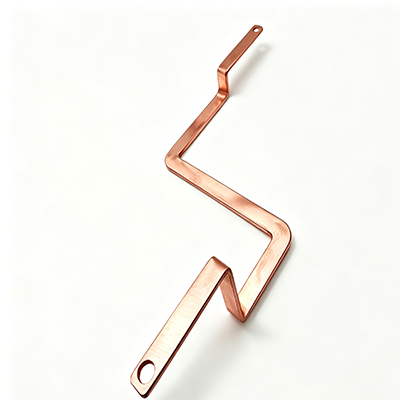
A new energy flexible copper busbar is a conductive connection component made primarily from high-purity copper, often
processed into a laminated, braided, braided-with-insulation, or laminated-flexible structure. Unlike rigid copper bars,
flexible copper busbars are designed to bend, absorb vibration, and compensate for installation tolerance while maintaining
excellent electrical conductivity.
In new energy applications, this type of busbar is used to connect batteries, modules, cells, terminals, inverters,
converters, distribution points, and other electrical components. It can handle high current transfer, reduce mechanical stress,
and improve system reliability in environments where equipment is subject to movement, thermal expansion, or frequent
maintenance requirements.
The term “new energy flexible copper busbar” is widely used in industries such as electric vehicles, lithium battery systems,
renewable energy storage, solar power generation, and high-power electronic equipment. It is valued not only for conductivity
but also for its combination of flexibility, durability, and installation convenience.
Why Is Flexible Copper Busbar Widely Used in New Energy Systems?
The rapid growth of the new energy sector has created demand for conductors that are both electrically efficient and mechanically
adaptable. Traditional rigid copper bars work well in fixed installations, but they may crack, loosen, or create stress under
vibration, movement, or repeated thermal cycling. Flexible copper busbar solves these problems by combining copper’s conductivity
with a structure that can absorb mechanical changes.
This is especially important in modern energy systems, where compact designs, high power density, and long service life are
essential. Flexible copper busbar is widely used because it helps reduce energy loss, simplify installation, improve safety,
and extend the operational life of equipment.
Core Advantages of New Energy Flexible Copper Busbar
1. Excellent Electrical Conductivity
One of the biggest advantages of flexible copper busbar is its outstanding electrical conductivity. Copper is one of the best
conductive materials commonly used in power transmission, making it ideal for high-current applications. A well-designed
flexible copper busbar offers low resistance, stable current flow, and reduced voltage drop.
In new energy applications, where efficiency directly affects performance and energy output, this conductivity advantage is
especially valuable. Lower resistance means less heat generation and better electrical efficiency, which supports improved
system stability and reduced power loss.
2. Strong Flexibility and Bendability
Unlike rigid busbars, flexible copper busbars can bend and adapt to complex layouts. This makes them highly suitable for
compact installations where space is limited or where components are not aligned in a straight line. Flexibility also helps
during assembly and maintenance, allowing easier routing and positioning.
In battery packs and energy storage cabinets, components are often densely arranged. A flexible busbar can connect terminals
without forcing mechanical stress on the system, which improves installation quality and reduces the risk of damage caused by
improper alignment.
3. Vibration Resistance and Mechanical Stability
New energy systems are often exposed to vibration, shock, or repeated motion. Electric vehicles, charging modules, and
wind power systems all operate under dynamic conditions. Flexible copper busbar can absorb these mechanical stresses better
than rigid conductors, helping prevent loosening, cracking, or connection failure.
This vibration resistance improves long-term reliability. By reducing stress on terminals and connection points, flexible
busbar helps protect sensitive electrical components and supports stable operation in demanding environments.
4. Better Heat Dissipation
Heat management is a critical issue in high-power energy systems. Flexible copper busbar has good thermal conductivity,
allowing heat to dissipate more effectively than many alternative connection methods. This reduces the risk of overheating
at contact points and improves the overall safety of the system.
Efficient thermal performance is particularly important in lithium battery systems and power electronics, where excess heat can
affect efficiency, accelerate aging, and create safety concerns. A flexible copper busbar helps maintain stable temperatures
during continuous operation and high-load conditions.
5. High Current Carrying Capacity
New energy flexible copper busbar is designed to carry large currents safely and efficiently. Because of the excellent
conductivity of copper and the busbar’s optimized structure, it can transfer power with minimal loss even in compact spaces.
This makes it suitable for large battery packs, inverter cabinets, power distribution units, and charging infrastructure.
Its high current capacity supports demanding applications where electrical performance must remain stable and efficient.
6. Reduces Installation Stress
A rigid conductor can create stress at connection points if the installation layout is not perfect. Flexible copper busbar
reduces this problem by adapting to the actual geometry of the system. It can compensate for minor alignment differences,
thermal expansion, and movement between connected parts.
As a result, terminals and fasteners experience less mechanical strain. This improves connection integrity and reduces the
likelihood of loosening or damage over time.
7. Improved System Reliability
Reliability is a major reason why flexible copper busbar is widely adopted in the new energy industry. The combination of
high conductivity, flexibility, thermal performance, and vibration resistance leads to a more dependable electrical connection.
In environments where system failure can lead to downtime, loss of output, or safety issues, a more reliable conductor is
a significant advantage. Flexible copper busbar helps support continuous operation and long service life.
8. Compact Design Compatibility
New energy equipment is increasingly designed to be smaller, lighter, and more power-dense. Flexible copper busbar is well
suited to these compact designs because it can be routed efficiently in tight spaces without sacrificing electrical performance.
This is particularly valuable in battery modules, control cabinets, and electric vehicle systems where space utilization is
critical. A flexible conductor simplifies layout design and improves overall system integration.
9. Easier Installation and Assembly
Flexible copper busbar can shorten installation time and simplify assembly. Because it can bend and adjust to different shapes,
installers spend less time forcing a rigid conductor into position. This helps improve manufacturing efficiency and reduce
installation errors.
In production environments, easier assembly can translate into lower labor costs, faster throughput, and more consistent
product quality. That is one reason flexible copper busbar has become a practical choice in mass production of new energy
equipment.
10. Supports Thermal Expansion and Contraction
Temperature changes cause materials to expand and contract. In electrical systems, this can create stress on rigid connection
points. Flexible copper busbar helps absorb these changes, maintaining stable connections across a wide operating range.
This feature is particularly useful in energy storage systems, outdoor power equipment, and high-load electrical assemblies
exposed to fluctuating temperatures. By reducing thermal stress, flexible busbar contributes to longer service life.
Key Performance Characteristics of Flexible Copper Busbar
The performance of a new energy flexible copper busbar depends on material quality, structural design, insulation type,
thickness, width, and connection method. Below are the most common technical characteristics used to evaluate this product.
Performance Item |
Typical Feature |
Why It Matters |
|---|
Conductivity |
High-purity copper with low resistance |
Supports efficient current transfer and reduces power loss |
Flexibility |
Bendable or laminated structure |
Adapts to compact layouts and movement |
Current Capacity |
Suitable for medium to very high current |
Supports power-intensive new energy systems |
Thermal Performance |
Good heat dissipation |
Helps manage temperature and improve safety |
Mechanical Strength |
Resistant to vibration and repeated bending |
Improves long-term connection stability |
Installation Adaptability |
Easy to route and position |
Reduces assembly difficulty and error rate |
Service Life |
Long-term performance under load |
Supports dependable operation in demanding applications |
Common Types of New Energy Flexible Copper Busbar
Flexible copper busbar is available in several structural types, each designed for different installation needs and
performance requirements.
Type |
Structure |
Main Use |
|---|
Laminate Flexible Busbar |
Multiple thin copper foils laminated together |
High-current electrical connections with compact design requirements |
Braided Copper Busbar |
Several copper strands braided into a flexible conductor |
Applications requiring high flexibility and vibration resistance |
Insulated Flexible Busbar |
Flexible copper conductor with insulation layer |
Protection against short circuits and external contact |
Custom-Shaped Busbar |
Manufactured according to specific layout needs |
Specialized equipment and space-limited systems |
Typical New Energy Application Scenarios
Flexible copper busbar is used across many new energy and power electronics applications. Its versatility and electrical
performance make it suitable for a broad range of systems.
Application Area |
Typical Role of Flexible Copper Busbar |
|---|
Electric Vehicles |
Battery pack connections, power distribution, inverter connections |
Energy Storage Systems |
Module-to-module and cell-to-pack electrical links |
Lithium Battery Packs |
High-current internal connections with vibration resistance |
Photovoltaic Systems |
Inverter and combiner box power transfer |
Wind Power Equipment |
Power conversion and control cabinet connections |
Charging Infrastructure |
High-power internal conductivity and thermal management |
Industrial Power Electronics |
Stable connections in high-current electrical cabinets |
Flexible Copper Busbar vs Traditional Rigid Busbar
To understand why flexible copper busbar is widely used, it helps to compare it with a traditional rigid busbar.
Comparison Item |
Flexible Copper Busbar |
Rigid Copper Busbar |
|---|
Flexibility |
High |
Low |
Installation Adaptability |
Excellent |
Limited |
Vibration Resistance |
Strong |
Moderate to low |
Stress on Terminals |
Lower |
Higher |
Compact Layout Compatibility |
Very suitable |
Less suitable |
Thermal Expansion Compensation |
Good |
Limited |
Typical Use |
New energy systems, dynamic equipment |
Fixed, stable installations |
Common Specification Parameters
When sourcing or designing a flexible copper busbar, several specification parameters are commonly considered. These may vary
depending on the application, but the following table provides a general reference.
Specification Parameter |
General Description |
|---|
Material |
High-conductivity copper |
Structure |
Laminate, braided, or customized flexible design |
Width |
Varies according to current and installation space |
Thickness |
Selected based on current load and mechanical need |
Length |
Customized to system layout |
Insulation |
May include protective or insulating layer |
Connection Method |
Bolted, welded, crimped, or custom terminal design |
Current Rating |
Dependent on size, structure, and thermal design |
Operating Environment |
Indoor, outdoor, high-vibration, high-temperature, or compact systems |
How Flexible Copper Busbar Improves New Energy System Performance
The performance benefits of flexible copper busbar go beyond simple conductivity. In real-world systems, it contributes to
better layout design, lower failure risk, easier maintenance, and more efficient power transmission.
For example, in a battery energy storage system, flexible copper busbar can connect modules while allowing enough movement to
absorb installation tolerance and temperature-related expansion. In an electric vehicle, it can help maintain stable current
flow despite continuous vibration and changing temperature conditions. In a photovoltaic inverter, it supports efficient power
transfer while making the internal layout more compact and organized.
These benefits help explain why flexible copper busbar has become a standard solution in many new energy applications. It
addresses both electrical and mechanical challenges at the same time.
Safety Benefits of Flexible Copper Busbar
Safety is a major concern in new energy systems. Flexible copper busbar can improve safety in several ways. First, it reduces
the risk of poor connections caused by misalignment or mechanical stress. Second, it helps lower heat buildup by providing a
low-resistance current path. Third, it can be designed with insulation or protective layers to reduce accidental contact and
short-circuit risks.
In high-current environments, even small connection problems can lead to serious issues. Using a flexible busbar helps reduce
these risks and supports safer system operation over time.
Why Manufacturers Prefer Flexible Copper Busbar
Manufacturers in the new energy industry prefer flexible copper busbar because it supports efficient production and reliable
final products. Its adaptable design helps reduce assembly complexity, simplify component alignment, and improve consistency
across production batches.
It also supports design freedom. Engineers can create more compact, high-performance systems without being restricted by the
limitations of rigid conductors. This is a major advantage in markets where product size, weight, and efficiency are all
important competitive factors.
Market Trends Driving Demand for Flexible Copper Busbar
Several industry trends are supporting the growth of flexible copper busbar demand. These include the rapid expansion of
electric vehicles, the widespread deployment of battery energy storage, the increasing adoption of renewable energy systems,
and the continued push for higher power density in electrical equipment.
As more systems require stable high-current transfer in compact and dynamic environments, flexible copper busbar is becoming
more valuable. Its ability to combine conductivity with mechanical adaptability makes it well aligned with the direction of
modern power system design.
Selection Considerations for New Energy Flexible Copper Busbar
Choosing the right flexible copper busbar requires attention to several factors. Current rating, operating temperature,
installation space, vibration level, insulation needs, and connection type should all be considered. The best choice depends
on the specific application rather than a single universal size or structure.
It is also important to evaluate material quality and manufacturing consistency. A well-made busbar should provide stable
conductivity, secure connection strength, and long-term reliability under real operating conditions.
Summary: Why Flexible Copper Busbar Is Widely Used in New Energy
New energy flexible copper busbar is widely used because it offers a rare combination of high conductivity, excellent
flexibility, vibration resistance, heat dissipation, and installation convenience. These advantages make it especially suitable
for modern energy systems that demand compact design, stable performance, and long service life.
Compared with rigid conductors, flexible copper busbar better supports the practical needs of electric vehicles, energy storage
systems, renewable power equipment, and high-current electronic assemblies. It helps reduce mechanical stress, improve safety,
simplify installation, and increase overall efficiency.
As the new energy sector continues to develop, the role of flexible copper busbar will likely become even more important. For
engineers, procurement teams, and industry researchers, understanding the advantages of flexible copper busbar is essential to
making smarter electrical design decisions.
Frequently Used SEO Keywords
new energy flexible copper busbar, flexible copper busbar advantages, copper busbar for new energy, flexible busbar for EV,
battery pack copper busbar, energy storage flexible busbar, high current copper busbar, insulated flexible copper busbar,
braided copper busbar, laminated copper busbar, flexible electrical busbar, new energy power connection solution
```


 +86 13169724781





 Phone
Phone
Comment
(0)