Aluminum Flexible Connection Manufacturer Low MOQ: Can You Order Small Quantities?
If you are searching for an aluminum flexible connection manufacturer low MOQ, you are likely trying to solve a very practical sourcing challenge: finding a supplier that can produce high-quality flexible connections in small quantities without forcing you into large-volume commitments. This is a common need for product developers, contractors, distributors, OEM buyers, maintenance teams, and purchasing managers who want to test a design, support pilot production, reduce inventory risk, or buy replacement parts in limited batches.
The short answer is yes, many aluminum flexible connection manufacturers can accept low MOQ orders, but the exact minimum order quantity depends on several factors, including product size, material grade, customization level, tooling requirements, production method, surface treatment, and packaging needs. In many cases, a manufacturer may offer small-batch orders for standard sizes or partially customized products, while fully custom designs may require a higher MOQ due to engineering and setup costs.
This page explains what aluminum flexible connections are, why low MOQ purchasing matters, what factors affect the minimum order quantity, standard specifications, common applications, key advantages, and how to evaluate a supplier. The content is designed to be SEO-friendly, industry-focused, and useful for blog pages, directory listings, category pages, and manufacturing information pages.
What Is an Aluminum Flexible Connection?
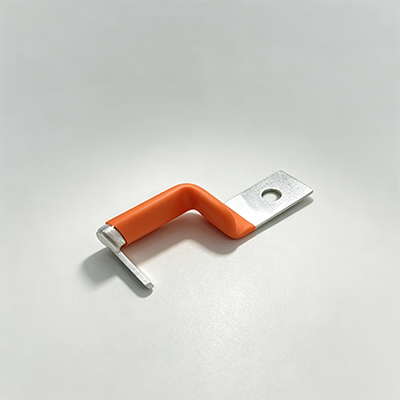
An aluminum flexible connection is a connection component designed to absorb movement, vibration, misalignment, thermal expansion, or mechanical stress while maintaining structural integrity and reliable performance. These parts are typically used in systems where rigid connections may fail, loosen, crack, or create noise under repeated motion or changing conditions.
Aluminum flexible connections can appear in many forms, such as flexible couplings, connector joints, expansion joints, flexible brackets, articulated connection pieces, and engineered aluminum assemblies with movement tolerance. The exact structure depends on the end-use industry, but the core function remains the same: to connect two components while allowing a controlled degree of flexibility.
Aluminum is a popular material for flexible connection products because it offers a strong balance of light weight, corrosion resistance, machinability, thermal conductivity, and cost efficiency. These properties make aluminum flexible connection products suitable for industrial equipment, HVAC systems, transportation equipment, architectural assemblies, electronics enclosures, and custom mechanical structures.
Why Low MOQ Matters in Aluminum Flexible Connection Purchasing
In manufacturing and procurement, MOQ means minimum order quantity. It is the smallest quantity a supplier is willing to produce or sell in one order. For buyers looking for an aluminum flexible connection manufacturer low MOQ, this is a critical issue because minimum order quantity directly affects cash flow, inventory risk, product testing, and supply chain flexibility.
Low MOQ is especially important in the following situations:
- Prototype development — when testing a new product design before full production.
- Small-batch manufacturing — when demand is limited or seasonal.
- Replacement part sourcing — when only a few units are needed for maintenance or repair.
- Market validation — when assessing customer response before scaling up.
- Inventory control — when buyers want to avoid overstock and storage costs.
- Custom project work — when a project needs specialized parts, but only in small quantities.
For many buyers, low MOQ is not just a purchasing preference; it is a business strategy. It reduces financial pressure, makes product development more agile, and allows companies to source only what they need at the right time.
Can You Order Small Quantities from an Aluminum Flexible Connection Manufacturer?
Yes, in many cases you can order small quantities. However, a manufacturer’s willingness to accept low MOQ depends on how the product is made and whether the item is standard or custom. A supplier that offers standard catalog products may provide very flexible quantity terms, while a custom manufacturer may set a higher MOQ to cover engineering, tooling, and production setup costs.
In general, low MOQ orders are more likely when:
- The product uses standard dimensions or common configurations.
- The material and finish are already part of the manufacturer’s regular production process.
- No expensive new tooling is required.
- The order can be combined with existing production runs.
- The buyer accepts longer lead times or slightly higher unit costs.
Conversely, MOQ may be higher when the order requires:
- Unique engineering or structural design.
- Special surface treatment or anodizing colors.
- Precision CNC machining with tight tolerances.
- Complex assembly or multi-part integration.
- New dies, molds, fixtures, or custom tooling.
Common Types of Aluminum Flexible Connections
Aluminum flexible connection products can vary widely across industries. Below are common product categories that buyers may encounter when sourcing from an aluminum flexible connection manufacturer.
Type |
Typical Function |
Common Features |
Usual MOQ Trend |
|---|
Flexible Couplings |
Connect rotating shafts while reducing vibration and misalignment |
Lightweight, durable, vibration damping |
Low to medium |
Expansion Joints |
Allow thermal expansion and contraction in structures or ducts |
Movement tolerance, corrosion resistance |
Medium |
Articulated Connector Parts |
Permit movement between joined components |
Hinged or pivoting design |
Low to medium |
Flexible Brackets |
Provide support while absorbing stress or movement |
Custom geometry, machine-formed profiles |
Low |
Custom Aluminum Assemblies |
Combine aluminum profiles, fasteners, and connection features |
Project-specific, modular or welded structure |
Medium to high |
Vibration-Isolating Connectors |
Reduce noise and mechanical fatigue in equipment |
Flexible section, shock absorption |
Low to medium |
Main Advantages of Aluminum Flexible Connection Products
Aluminum flexible connections are widely used because they combine material efficiency with mechanical performance. Their advantages make them attractive for both large-scale industrial use and low MOQ procurement.
1. Lightweight Construction
Aluminum is significantly lighter than many other metals, which helps reduce overall equipment weight, improve handling, and lower transportation costs. This is especially useful in aerospace, automotive, mobile equipment, and modular structures.
2. Corrosion Resistance
Aluminum naturally forms a protective oxide layer that improves resistance to corrosion. This makes it suitable for indoor and outdoor environments, especially when combined with anodizing or coating.
3. Good Strength-to-Weight Ratio
Many aluminum alloys offer a strong balance between weight and strength. For flexible connection applications, this means the part can remain lightweight while still performing under load.
4. Easier Machining and Fabrication
Aluminum is relatively easy to cut, drill, shape, weld, and machine, which supports custom manufacturing and small-batch production. This can be helpful for buyers seeking low MOQ orders.
5. Thermal Performance
Aluminum has good thermal conductivity, which can be beneficial in applications exposed to heat, temperature changes, or expansion stress.
6. Attractive Finish Options
Aluminum flexible connection products may be anodized, brushed, powder coated, polished, or left with a natural finish depending on the application and appearance requirements.
Typical Applications of Aluminum Flexible Connections
Aluminum flexible connection components are used across a broad range of industries. Their versatility makes them ideal for equipment that needs movement tolerance, structural flexibility, or stress reduction.
Industry |
Typical Use Case |
Performance Need |
|---|
HVAC |
Duct connections, expansion management, vibration control |
Movement tolerance and sealing support |
Industrial Machinery |
Equipment links, connector parts, motion-tolerant assemblies |
Strength and fatigue resistance |
Automotive |
Lightweight connectors, support elements, system joints |
Weight reduction and durability |
Transportation |
Rail, marine, and vehicle connection systems |
Vibration control and corrosion resistance |
Construction |
Architectural joint systems and structural connectors |
Load distribution and flexibility |
Electronics and Enclosures |
Light structural connection components |
Precision and compact design |
Energy and Utilities |
Support structures, protective connectors, equipment interfaces |
Environmental resistance |
What Affects MOQ for Aluminum Flexible Connection Orders?
If you are comparing suppliers, understanding the factors that affect MOQ can help you negotiate better and choose the right manufacturer. MOQ is rarely arbitrary; it usually reflects actual production economics.
Material Grade
Common aluminum grades such as 6061, 6063, 5052, and 7075 may have different procurement and machining costs. If a manufacturer stocks the material, low MOQ is often easier to support.
Product Complexity
The more complex the design, the more setup work is required. Complex geometry, multiple bends, precise tolerances, or integrated moving parts can raise MOQ.
Tooling and Setup
Custom dies, molds, fixtures, and machining programs all add cost. Low MOQ is more realistic when no new tooling is needed.
Surface Treatment
Processes like anodizing, coating, brushing, or polishing can increase cost and sometimes require batch processing. This can affect the minimum order quantity.
Production Method
Extrusion, CNC machining, stamping, laser cutting, bending, welding, and assembly all have different setup requirements. A simple CNC-based prototype run may be possible in small quantities, while extrusion with custom dies usually requires a higher MOQ.
Packaging and Logistics
Special packaging, labeling, and export documentation may influence order size. When packaging is highly customized, a supplier may prefer larger batches.
Standard Aluminum Flexible Connection Specifications
The following table provides a general reference for common aluminum flexible connection specifications. Actual dimensions and properties vary by design, application, and supplier capability.
Specification Item |
Common Range / Option |
Notes |
|---|
Material |
Aluminum alloy 6061, 6063, 5052, 7075 |
Selected based on strength, corrosion resistance, and machinability |
Thickness |
0.8 mm to 10 mm+ |
Depends on structural load and product type |
Length |
Custom or standard lengths |
May be cut-to-size for small orders |
Width / Diameter |
Application-specific |
Selected according to installation space and load requirements |
Flexibility Range |
Low, medium, or high movement tolerance |
Defined by structural design and joint type |
Surface Finish |
Mill finish, anodized, powder coated, brushed, polished |
Chosen for appearance and protection |
Tolerance |
Standard industrial or precision tolerance |
Tighter tolerance usually increases cost |
Joining Method |
Bolted, riveted, welded, slotted, hinged |
Depends on function and assembly needs |
Order Quantity |
Low MOQ to bulk production |
Varies by supplier and customization level |
Low MOQ Ordering Benefits for Buyers
Working with an aluminum flexible connection manufacturer that supports low MOQ can create meaningful procurement advantages. These benefits often apply to both small businesses and larger organizations managing multiple projects.
Reduced Inventory Risk
Smaller order sizes reduce the risk of overbuying, especially when design revisions, customer demand changes, or project delays occur.
Lower Initial Investment
Low MOQ helps buyers control upfront spending. This is particularly useful for startups, engineering teams, and pilot projects.
Faster Design Validation
Ordering small quantities allows product teams to test fit, function, durability, and installation before scaling up production.
More Flexible Sourcing Strategy
Buyers can source different versions of aluminum flexible connection products without committing to a large batch of each design.
Better Customization Testing
Low MOQ makes it easier to compare different materials, finishes, and dimensions in real-world use.
Challenges of Low MOQ Manufacturing
Although low MOQ is highly attractive, it also comes with practical challenges for both buyers and manufacturers. Understanding these tradeoffs helps set realistic expectations.
- Higher unit price compared with large-volume orders.
- Limited customization for small batches if tooling is required.
- Longer lead times if production must wait for machine scheduling.
- Fewer material options when the supplier does not stock certain alloys.
- Batch-based surface treatment that may require grouping with other orders.
For many projects, these tradeoffs are acceptable because the benefits of lower risk and higher flexibility outweigh the added per-unit cost.
How to Evaluate an Aluminum Flexible Connection Manufacturer for Low MOQ
When searching for an aluminum flexible connection manufacturer low MOQ, buyers should evaluate more than just the order minimum. A strong supplier should also provide engineering support, consistent quality, and clear communication.
Evaluation Factor |
Why It Matters |
What to Look For |
|---|
MOQ Policy |
Determines small-order feasibility |
Transparent minimum order terms |
Material Availability |
Affects lead time and flexibility |
Stocked aluminum grades and sizes |
Engineering Capability |
Supports custom designs |
Draft review, CAD support, sample development |
Production Methods |
Impacts cost and scalability |
CNC, extrusion, bending, stamping, welding |
Quality Control |
Ensures consistency in small and large orders |
Inspection reports, dimensional checks, traceability |
Surface Finish Options |
Affects appearance and performance |
Anodizing, coating, polishing, deburring |
Sample Support |
Important for new projects |
Prototype samples and trial orders |
Lead Time |
Affects project schedules |
Clear production and shipping timeline |
Best Practices for Ordering Small Quantities
If you want to order aluminum flexible connection parts in small quantities, the following practices can improve your sourcing outcome:
- Provide complete drawings, dimensions, and tolerance requirements.
- Specify the intended application and load conditions.
- Confirm whether the product is standard or custom.
- Ask about available aluminum grades and finishes.
- Request sample production before placing repeat orders.
- Clarify packaging, labeling, and delivery requirements early.
- Discuss whether small orders can be combined with future replenishment plans.
Clear technical communication is especially important for low MOQ purchasing because small-batch jobs often have less room for ambiguity. The more precise your specifications, the more likely you are to receive a usable and cost-effective product.
Common Buyer Questions About Low MOQ Aluminum Flexible Connections
Is low MOQ the same as no MOQ?
Not necessarily. Low MOQ means the minimum order quantity is small, but not always zero. Some manufacturers may allow one sample or a very limited trial batch, while others may still set a small starting quantity.
Are small orders more expensive?
Usually yes. Small orders often have a higher unit price because setup, handling, and production preparation costs are spread across fewer pieces.
Can custom aluminum flexible connections be ordered in small quantities?
Often yes, but it depends on the complexity of the design and whether new tooling is required. Simple custom machining projects are more likely to support low MOQ than highly specialized formed parts.
What if I only need samples?
Many manufacturers can provide sample quantities for testing or approval. Sample availability depends on the product type, drawing complexity, and production method.
How can I reduce MOQ concerns?
Choose standard designs, use stocked materials, simplify surface finishing requirements, and work with a supplier that regularly supports small-batch production.
SEO-Related Keyword Variations for This Topic
For content planning, directory pages, or blog optimization, the following keyword variations are closely related to aluminum flexible connection manufacturer low MOQ:
- aluminum flexible connection manufacturer
- low MOQ aluminum connector supplier
- small batch aluminum flexible connection
- custom aluminum flexible connection
- aluminum flexible joint manufacturer
- small quantity aluminum connector order
- aluminum flexible connection supplier
- minimum order quantity aluminum parts
- custom aluminum connection components
- low volume aluminum manufacturing
Summary
An aluminum flexible connection manufacturer low MOQ can be an excellent sourcing partner for buyers who need flexibility, reduced inventory risk, and small-batch production support. In many cases, small quantities are available for standard designs, prototype development, and limited production runs. However, MOQ depends on material selection, complexity, tooling, surface treatment, and manufacturing method.
Aluminum flexible connections are valued for their lightweight structure, corrosion resistance, strength-to-weight ratio, and adaptability across industries. Whether you are buying for HVAC, machinery, automotive, construction, transportation, or custom engineering projects, low MOQ sourcing can help you move faster and buy smarter.
If you are preparing content for a blog, category page, or industry information page, this topic supports strong SEO targeting because it combines high-intent commercial keywords with practical educational information. Using clear headings, keyword-rich phrasing, and structured tables can help improve search visibility and user engagement.


 +86 13169724781





 Phone
Phone
Comment
(0)